

Industries: Restaurants & Dining
Diners search for the occasion as often as the restaurant.
Best waterfront dinner near me tonight?
Diners often pick the occasion before they pick the restaurant. I check what Google, Maps, reviews, your menu and AI tools like ChatGPT say about your restaurant, and what's keeping you out of the answer.
If this sounds familiar
“Diners pick before they ever see your menu.”
Diners rarely start with a restaurant name. They ask for a cuisine, an occasion, a neighborhood or a dietary need, then choose from the few places that come back. A table is won or lost in that answer, before anyone opens your menu.
The decision underneath: “Where should I eat for this occasion?”
A diner may be choosing an experience before they choose a name: date night, a table for eight, something the kids will eat, somewhere on the water. Those are all different ways of asking one question: where should we eat tonight? I test the real questions diners ask for each occasion, not just one search.
This is already happening. 45% of consumers used AI to find local businesses in the past year, up from 6% the year before (BrightLocal, 2026). Your restaurant needs to look right in AI answers and on Google.
Real questions, real answers
When someone nearby asks where to eat tonight, is your restaurant one of the answers?
Dining decisions happen fast, often the same day, and more people now ask instead of browsing. Tap a question to see what AI needs to know before it suggests your restaurant.
Choose a question
What the answer depends on
Whether AI can tell you're open, nearby and right for tonight.
Hours and current status
Whether opening hours, service times and seasonal closures are accurate everywhere, since an answer for tonight excludes anything that looks closed.
Maps and business listings
Whether the location, neighborhood and category are precise enough for a system to place you near the person asking.
Recent reviews
Whether there is fresh review activity, which is treated as evidence that the restaurant is open and worth suggesting.
Free. No call required.
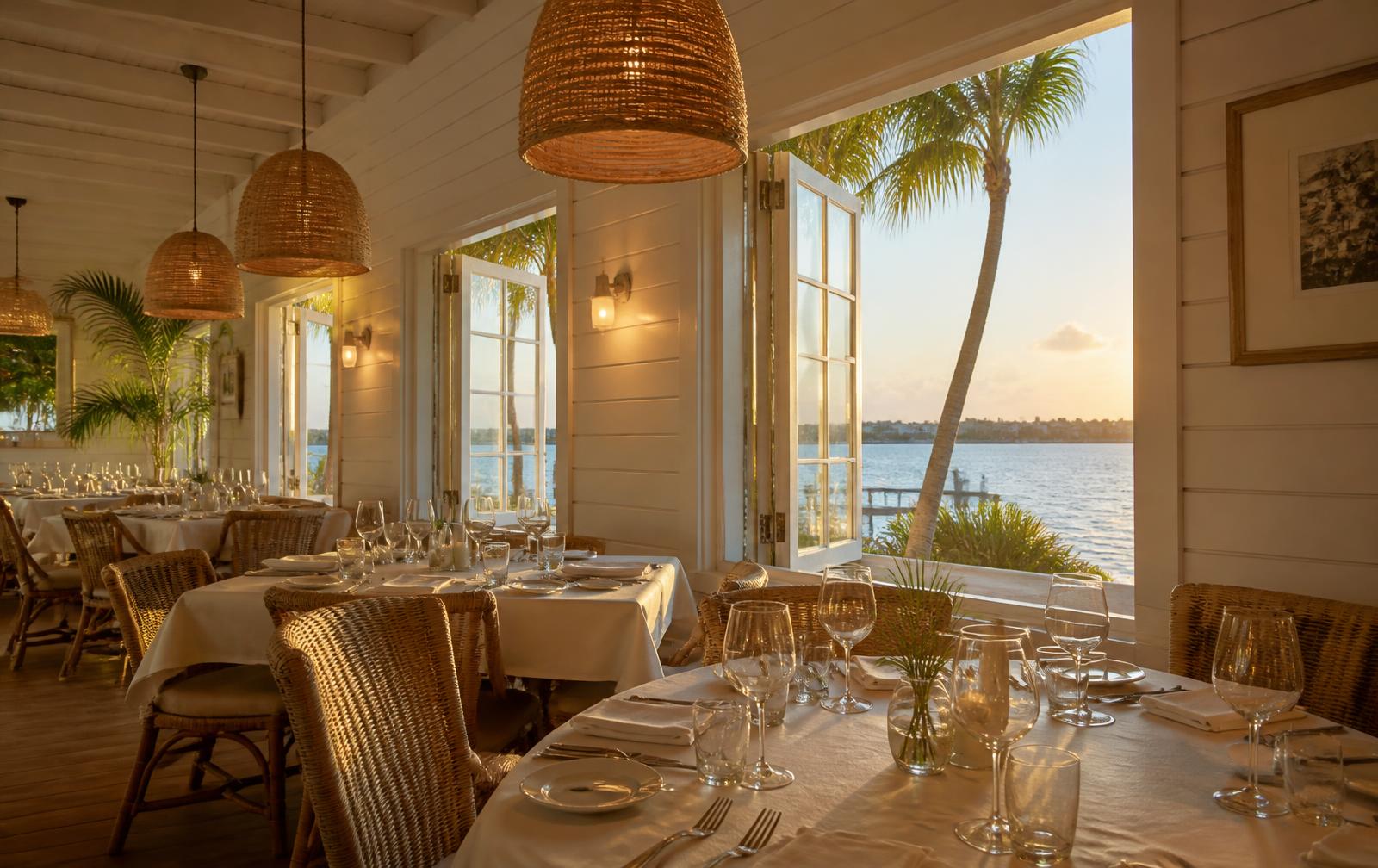
Your next diner may choose from an answer before they ever reach your website.
Why this happens
How dining decisions are actually made now
Restaurant discovery is short-notice and highly conditional: tonight, near here, for four people, with something the kids will eat. Search and AI systems answer by combining your menu and website text, your map listing and hours, recent review language and the local guides that describe the dining scene. Recency matters more here than in almost any other category, because an outdated menu or a wrong closing time removes you from consideration entirely.
- 01
The menu is a PDF or an image
If dishes, cuisine and dietary options cannot be read as text, the restaurant cannot be matched to what a diner actually asked for.
- 02
Hours are wrong somewhere
Seasonal hours, holiday closures and kitchen times often disagree between the website, the map listing and the reservation platform. When AI sees hours that don't match, it tends to leave you out.
- 03
The occasion is never described
Birthdays, families, date nights and large parties are the actual query. If nothing on the site speaks to them, the restaurant is only ever matched on cuisine and distance.
- 04
Review language does not match the positioning
Recent reviews are the freshest evidence available. When they describe a different restaurant than the one your site describes, the reviews are what get quoted.
A $750 Visibility Check shows which of these is affecting you, with screenshots.
Where the answer comes from
Search, maps, reviews and local sources become one recommendation.
No single source decides. The answer a customer receives is assembled from all of them, which is why they have to agree.
Search
Maps
Reviews
Website
Local sources
AI answers
Recommendation
Hover any stage to see what it contributes.
Search
What search engines can find and understand about the business.
Maps
Whether location, category and opening details agree everywhere.
Reviews
How ratings and review language are read across platforms.
Website
Whether the site confirms what every other source claims.
Local sources
Directories, publications and travel sources that vouch for it.
AI answers
What an assistant assembles from all of the above.
Recommendation
The shortlist a customer actually sees.
Where to start
Most restaurants start with the free Snapshot. From there, you choose how much help you want.
Find it
See what's wrong, with proof. Free Snapshot or a $750 Visibility Check.
Fix it
I fix your Google profile, listings, menu text and key pages. Fix Package, $1,500.
Build it
A restaurant website built with the Goldeneye Framework, with your menu as real text, not a PDF. From $3,500.
Keep it working
Monthly checks so wrong hours and old menus get caught fast. From $395 a month.
Related questions
- We are busy already. Why would this matter?
- Visitor-driven dining shifts with the season. Being recommended matters most in the weeks when regulars are not filling the room and every table comes from someone asking where to eat.
- Is this the same as managing our reviews?
- No. Reviews are one of several sources. This is about whether your restaurant is found, correctly described and recommended across search, maps, reviews and AI answers together.
- Can Goldeneye guarantee an AI assistant will recommend us?
- No. No one controls what AI tools say. I fix the information they rely on, retest, and show you what changed.
- How much does this cost for a restaurant?
- The Snapshot is free. Most restaurants start with a $750 Visibility Check or go straight to the $1,500 Fix Package. Monthly monitoring is $395.
Related services and guides
Guides for restaurant owners
Plain-language guides to how diners find restaurants today.
Finding a waterfront seafood restaurant tonight
Somebody wants seafood by the water this evening, and the answer has to be available, close and open.
Decision Guide
Choosing a restaurant for a group with different needs
One person is booking for several, and the venue has to satisfy constraints that pull in different directions.
Decision Guide
Being found by someone who is already nearby
The person deciding is within a few minutes of you, has not named a business, and will act almost immediately.
Decision Guide
Being described accurately when you are not the one describing yourself
Somebody is asking about your business, and the answer is assembled from sources you do not control.
Decision Guide